We're iLean, and we're experts in Business Agility. Of course, we want to share our expertise and insights with you.
That's why we've built a community of Agile professionals and enthusiasts, along with our brand new Agile Kitchen blog, where we post about our recent learnings.
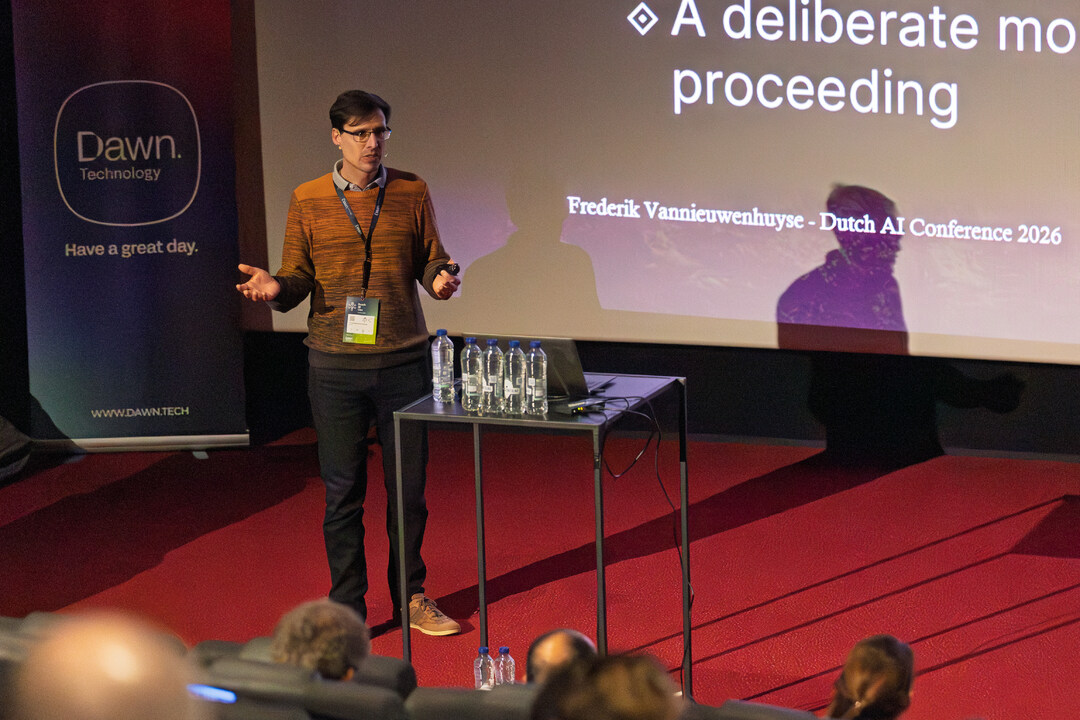
Let's dive into a recap of our latest Agile Kitchen community session held on June 24th at Spoor 18 in Mechelen. The focus was on Agile beyond code, exploring the application of Agile principles in non-software environments. We shared practical examples from our work with Barry Callebaut and VRT before hosting a World Café for attendees to exchange their experiences on the night's topics. Finally, we summarized the key takeaways for your future reference.
For starters: Agile beyond code
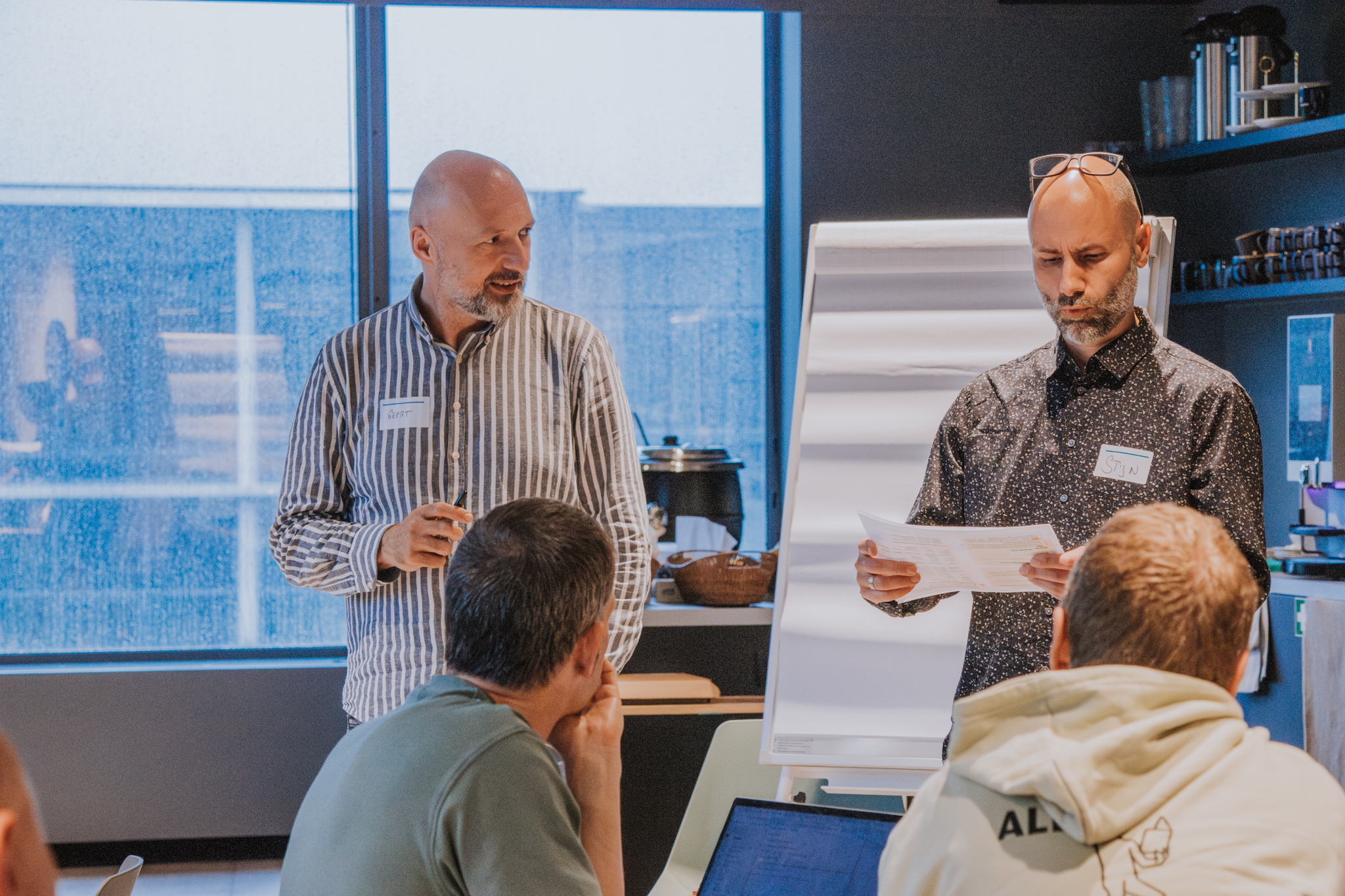
This record-breaking Agile Kitchen event centered around applying Agile principles in non-software environments. It featured real-world cases from VRT's broadcasting and infrastructure team, as well as Barry Callebaut's manufacturing processes, immediately grounding the subject in tangible examples. Over 50 attendees gathered in Mechelen to hear our Agile coaches Geneviève Loriaux and Maarten Van Elsen lead the event, joined by Stijn Van Durme, Global Innovation & Technology Engineer at Barry Callebaut.
So, what exactly did ‘Agile Beyond Code’ explore?
Through a series of relatable examples, we underscored the distinction between Agile values and principles and Agile practices. While practices vary depending on the context, values and principles remain context-independent and widely applicable. Our starting point for the event was to concentrate on project and portfolio management and fostering better teams by introducing Agile principles and values to non-IT-driven environments.
Several Agile approaches or practices are commonplace in IT-related work situations but may falter in other work environments. Still, Agile values and principles are instrumental in speeding up innovation processes and boosting team performance. That’s why it's important to differentiate between broad Agile principles and values on the one hand and work-specific Agile practices on the other.
Appetizer: Driving rapid innovation at Barry Callebaut
Our first course for the night delved into applying Agile principles with a 'discover what works for you' mindset rather than following a strict by-the-book approach. Agile Coach Maarten Van Elsen and Global Innovation & Technology Engineer Stijn Van Durme discussed Barry Callebaut's journey towards Business Agility, aiming to expedite innovation projects. They found that traditional Scrum and Kanban frameworks weren't suitable for their manufacturing context.
Instead of forcing these frameworks, they hand-picked Agile principles and practices that better suited their unique needs. One of these practices was Rapid Learning Cycles (RLC), which delays decision-making until the latest responsible moment for effective risk management. RLC is particularly useful in situations with high uncertainty and a high cost of change. As a result, Barry Callebaut experienced improved decision-making, continuous growth, and increased value delivery.
How did Barry Callebaut make it work?
These tailored strategies allowed Barry Callebaut to implement Agile principles in a way that suited their unique needs, demonstrating the versatility of the Agile methodology in non-IT contexts.
Key takeaways from the project
Main course: The power of trust and transparency at VRT
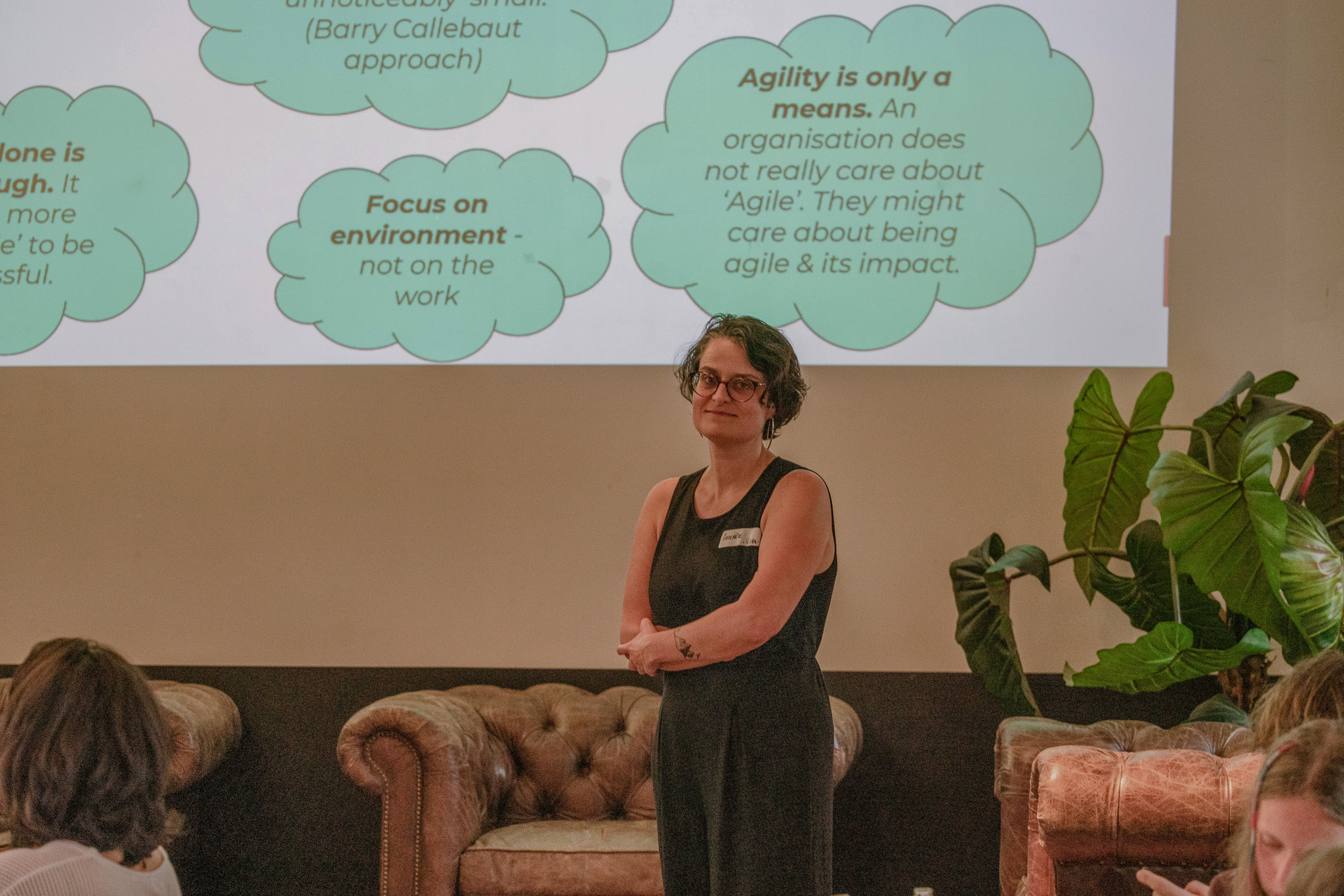
Following the exploration of the Barry Callebaut case, Geneviève shared the challenges and successes she experienced while implementing Agile at VRT. Unlike typical software environments, VRT’s infrastructure projects involve high costs of change and critical operations. Initially, Geneviève encountered resistance but demonstrated Agile’s value through quarterly planning, cross-functional teams, and integrating their way of working (WoW) into tooling.
Continuous improvement
Geneviève initiated the process by evaluating which Agile practices were unsuitable for VRT’s infrastructural work. From a shortlist of challenges, she identified two key issues related to Agile implementation:
This Agile belief proved ineffective for VRT's specific work environment due to two primary reasons:
The second belief, iterative and incremental delivery, was considered a standard but didn't function optimally in VRT's work environment. Geneviève found it challenging to divide infrastructural work into end-to-end delivery on one hand, and it was difficult to provide feedback in a hardware environment.
Instead of blindly adhering to these Agile practices, Geneviève sought principles or methods that would better suit VRT's specific work context. These included:
Dessert: World Café
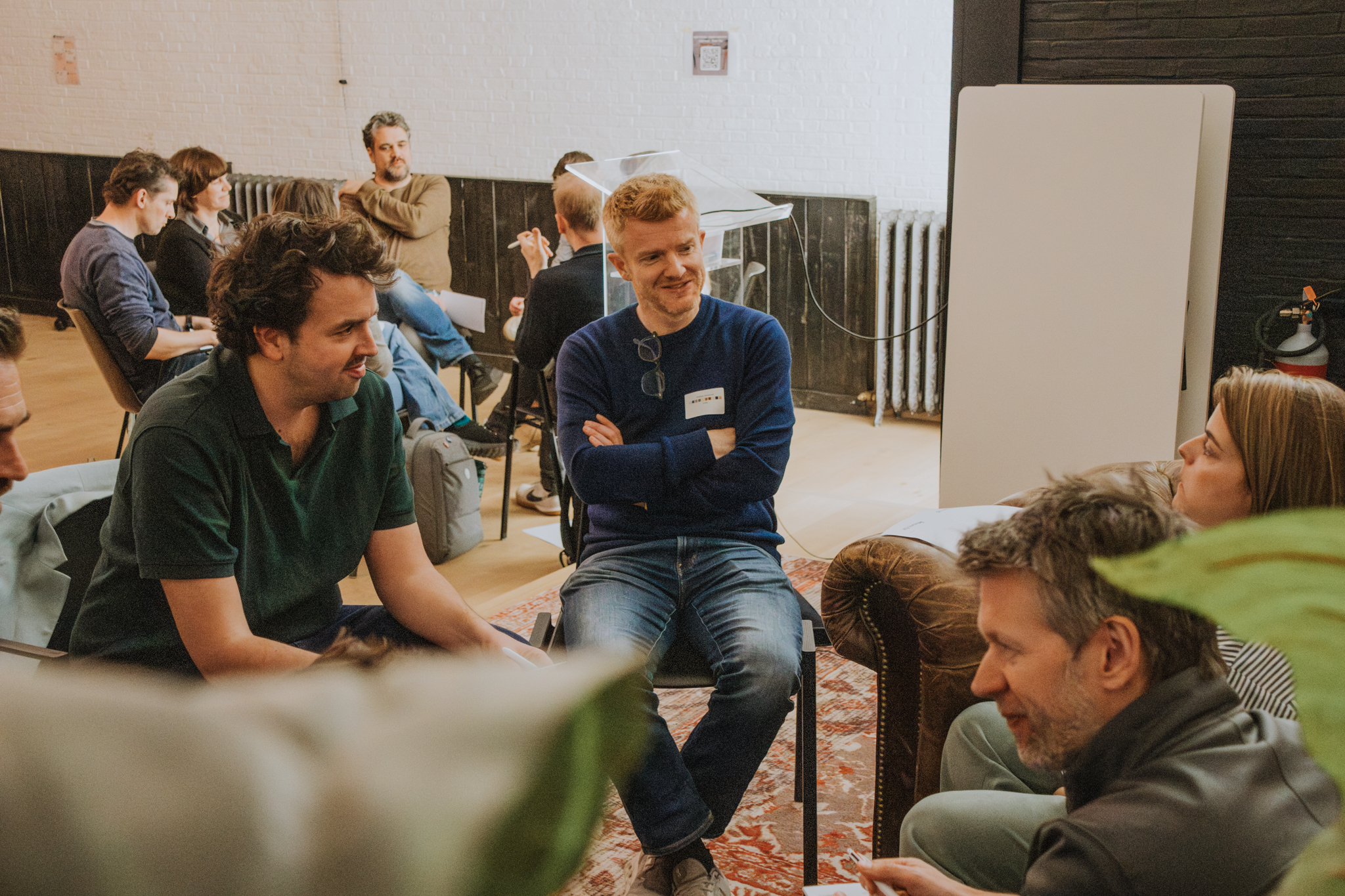
To wrap up the event after these two inspiring sessions, we wanted to involve our Agile Community audience too. So, we set up a World Café, consisting of three questions:
This interactive part of the evening allowed participants to discuss assumptions to challenge in non-IT contexts, the differences in Agile learning paths across various environments, how standard Agile practices might backfire, and how to adapt.
Doggy Bag: Tonight’s takeaways
In general, today’s Agile Kitchen emphasized that while Agile principles are universally applicable, Agile practices require context-sensitive adaptations since they don't apply to every work environment. Through two tangible use cases, we provided valuable insights, practical tools, and a platform for networking and learning from diverse experiences. To conclude the evening, both Maarten and Geneviève offered several takeaways they believe apply to every organization:
Future reservations: Stay tuned for more Agile community sessions
This recap emphasizes the broad applicability of Agile principles and the importance of adapting these methods to suit various contexts. The session was both enlightening and inspiring, as it showcased how Agile can drive innovation and efficiency beyond traditional software development environments. Stay tuned for upcoming Agile community sessions to continue learning and growing together.